How to Build an Emergency Fund Step by Step: A Practical Guide for Beginners Learn how to build an emergency fund step by step, calculate your savings target, start with a small amount, and prepare for unexpected expenses. Unexpected expenses can disrupt even a carefully planned budget. A car may need urgent repairs, a household appliance may stop working, or your income may suddenly decrease. Without savings set aside for these situations, you might have to borrow money, delay an essential payment, or use funds intended for another goal. An emergency fund provides a financial buffer between an unexpected problem and a financial crisis. It is money reserved for necessary, unplanned expenses rather than ordinary shopping, entertainment, holidays, or routine bills you can anticipate. The good news is that you do not need a high income to begin building one. You need a realistic target, a savings method you can maintain, and a clear understanding of which expenses qualify as emergencies. ...
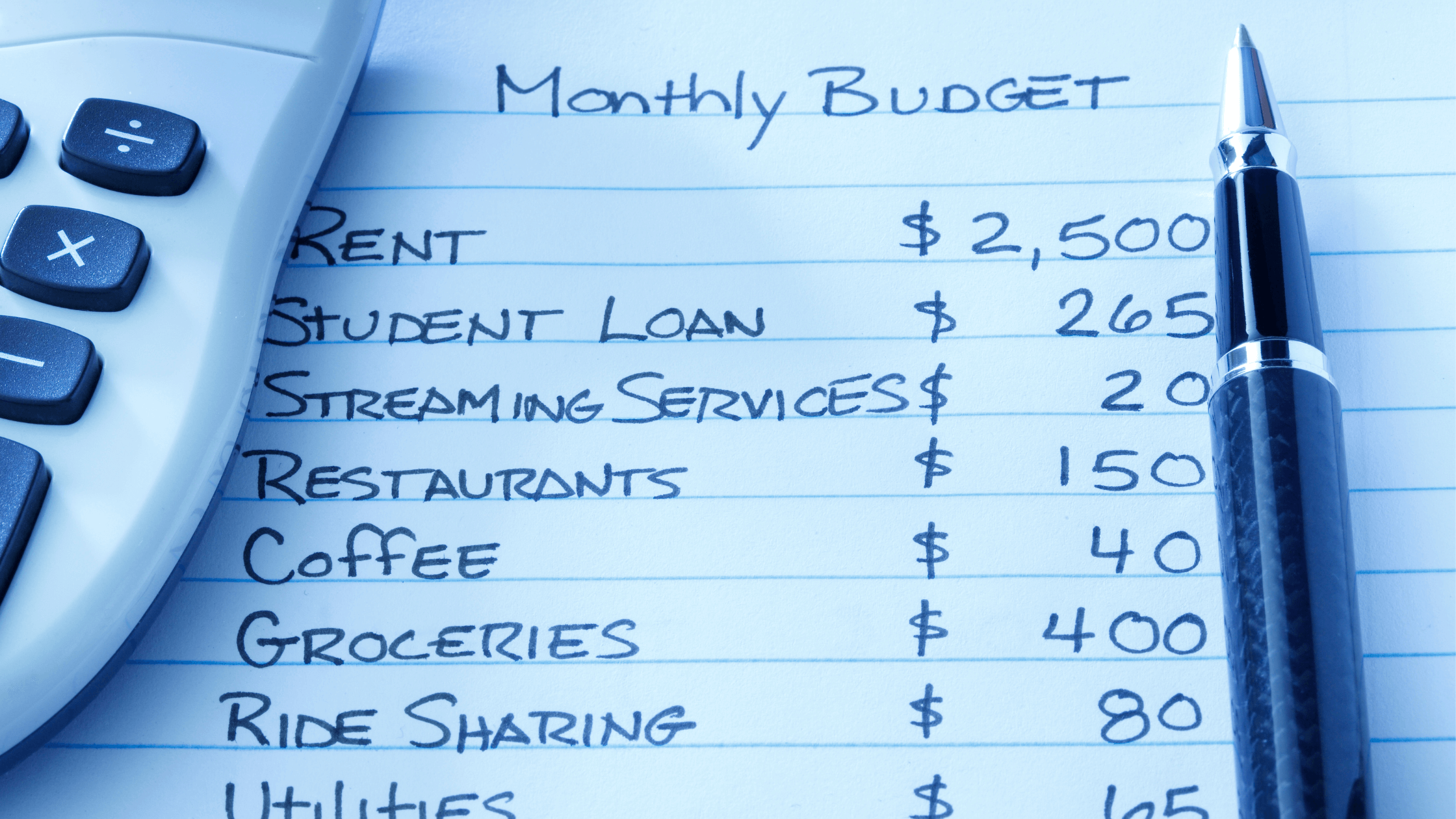
How to Create a Monthly Budget That Actually Works
Managing money can feel difficult even when you earn a regular income. Rent, groceries, transportation, subscriptions, debt payments, and unexpected expenses can consume your money before you have time to think about your financial goals. You may even reach the end of the month wondering where your paycheque went.
A monthly budget can help you understand where your money goes and decide what you want it to do.
The good news is that you do not need a high income, expensive software, or complicated spreadsheets to get started. A useful budget begins with three things: knowing how much money you receive, understanding what you spend, and making a realistic plan for the difference.
In this guide, you will learn how to create a monthly budget step by step, organize your expenses, work with an irregular income, and use a practical example to build a plan you can maintain.
What Is a Monthly Budget?
A monthly budget is a plan for how you will use the money you expect to receive during a month. It organizes your income, expenses, savings, and debt payments so you can make decisions before your money is spent.
A budget is not simply a list of things you are forbidden to buy. It is a way to make your spending reflect your priorities.
For example, imagine that you earn $2,800 a month after taxes. You pay rent, buy groceries, travel to work, and cover several household bills. Without a plan, you might spend whatever remains in your account after paying the most urgent bills.
With a budget, you can assign money to essential expenses, set aside something for emergencies, make planned debt payments, and decide how much you can comfortably spend on entertainment.
The currency in this example is illustrative. The same process works with US dollars, Canadian dollars, British pounds, or another currency.
Why Does a Monthly Budget Matter?
A budget helps you make decisions using actual numbers rather than guesses.
First, it gives you a clearer picture of your financial position. You can see whether your regular expenses fit within your income or whether you are relying on credit to cover a shortfall.
Second, a budget helps you prepare for future costs. Annual insurance payments, school expenses, vehicle maintenance, and holiday spending may not occur every month, but they can still disrupt your finances when they arrive.
Third, it makes financial goals more practical. Instead of saying, "I want to save more money," you can decide how much to save, when to transfer it, and what the money is intended for.
A budget can also help you identify spending that no longer provides enough value. You might discover that you are paying for subscriptions you rarely use or that frequent convenience purchases cost more than expected.
However, budgeting is not a substitute for having enough income to cover essential needs. If your basic expenses are already higher than your income, the solution may require a combination of cost adjustments, additional income, payment arrangements, or assistance with essential expenses.
Step 1: Calculate Your Monthly Take-Home Income
Start by identifying how much money you can actually use.
If you are employed, use your take-home pay rather than your salary before taxes and other payroll deductions. Your take-home pay is the amount that reaches you after those deductions.
Include other reliable sources of income, such as regular freelance payments, business income after relevant operating costs, pensions, or benefits.
If you earn money from several sources, list each one separately before calculating the total.
For example:
| Income source | Monthly amount |
|---|---|
| Employment income after deductions | $2,300 |
| Freelance income after business costs | $350 |
| Other reliable income | $150 |
| Total monthly income | $2,800 |
Only count income you reasonably expect to receive. If freelance work is inconsistent, avoid assuming that an unusually good month will happen every month.
What if your income changes every month?
If your income fluctuates, look at several recent months to understand your typical earnings. A conservative estimate can help prevent you from committing money you may not receive.
You can build your essential budget around a lower, realistic income level and decide how to use extra income when it arrives.
For example, you might direct additional earnings toward overdue bills, a small emergency reserve, high-cost debt, or a specific savings goal. The right order depends on your circumstances and the urgency of your obligations.
Step 2: Track Your Expenses Before Setting Limits
One of the most common budgeting mistakes is choosing spending limits before finding out what you actually spend.
For at least two to four weeks, record your purchases and bills. Reviewing one to three months of bank statements can provide an even clearer picture, especially for irregular expenses.
Look at bank and card statements, receipts, bills, and cash purchases. Record small transactions as well as large ones.
Organize your spending into categories such as:
Housing and utilities
Groceries and household supplies
Transportation
Healthcare and insurance
Debt payments
Phone and internet
Personal spending and entertainment
Savings
Irregular and annual expenses
The purpose of this exercise is not to criticize every purchase. It is to establish an accurate starting point.
For example, you may believe you spend $200 a month on eating out. After checking your statements, you discover that restaurant meals, takeaway orders, and workday snacks total $310.
That difference matters. You cannot create a realistic plan until you understand the actual pattern.
The US Consumer Financial Protection Bureau provides tools for tracking income, expenses, and bills. Its guidance recommends using real spending information rather than editing your figures to reflect what you think you should spend.
Resource: Consumer Financial Protection Bureau — Assess Your Spending.
Step 3: Separate Essential Expenses From Flexible Spending
Once you understand your expenses, divide them into useful categories.
Essential expenses
These are costs necessary to maintain your basic living arrangements and responsibilities. Examples may include rent, basic food, utilities, essential transportation, healthcare, and required debt payments.
What counts as essential depends on your circumstances. A car may be necessary for someone who lives far from public transportation, while another person may be able to commute by bus.
Flexible or discretionary expenses
These are expenses you have more control over, such as restaurant meals, entertainment, nonessential shopping, or some subscriptions.
The distinction is not always absolute. Internet access, for example, may be essential for someone who works remotely or studies online.
The purpose of categorizing expenses is to identify which costs can be adjusted without putting your health, safety, employment, or important obligations at risk.
Do not automatically cut healthcare, necessary insurance, or other important expenses simply because they are expensive. Investigate safer alternatives and available assistance where appropriate.
Step 4: Choose a Budgeting Method
There is no single budgeting method that works for everyone. The best one is simple enough to maintain and detailed enough to guide your decisions.
The 50/30/20 budgeting guideline
One popular starting point is to allocate:
50% of take-home income to needs.
30% to wants.
20% to savings and debt goals.
For a monthly take-home income of $2,800, this would mean:
| Category | Percentage | Illustrative amount |
|---|---|---|
| Needs | 50% | $1,400 |
| Wants | 30% | $840 |
| Savings and debt goals | 20% | $560 |
| Total | 100% | $2,800 |
This is a guideline, not a rule you must follow. If housing costs are high where you live, essential expenses may exceed 50%. If your income is low or you have substantial debt obligations, saving 20% may not be possible yet.
Do not treat these percentages as a test of financial discipline. Use them to start a conversation with your own numbers, then adjust the categories to fit your reality.
Zero-based budgeting
In a zero-based budget, you assign a purpose to every unit of income. That purpose may be paying bills, buying food, saving, repaying debt, or spending on something you enjoy.
The objective is for income minus planned allocations to equal zero. It does not mean that your bank account should contain nothing.
This method can be helpful if you want to know exactly where your money is going. It requires more attention than a simple budget, particularly when many transactions occur during the month.
The pay-yourself-first method
With this approach, you set aside an affordable amount for a savings goal when income arrives, then plan the remaining money around your expenses.
This can help people who find it difficult to save whatever happens to remain at the end of the month. However, do not automatically transfer money into savings if doing so will leave you unable to pay essential bills or meet important obligations.
You can combine methods. For example, you might automatically transfer a small savings contribution and use category limits to manage the rest of your spending.
Step 5: Build a Realistic Monthly Budget
Consider the following illustrative example for someone receiving $2,800 per month after deductions.
| Budget category | Planned amount |
|---|---|
| Rent | $900 |
| Utilities | $140 |
| Groceries and household supplies | $300 |
| Transportation | $180 |
| Phone and internet | $80 |
| Insurance and healthcare | $120 |
| Debt payments | $180 |
| Personal spending and entertainment | $200 |
| Irregular-expense fund | $100 |
| Emergency savings | $200 |
| Long-term savings goal | $150 |
| Flexible buffer | $250 |
| Total allocated | $2,800 |
In this example, all income has been assigned a purpose.
The $100 irregular-expense fund is for predictable but non-monthly costs, such as annual renewals, clothing replacements, or routine maintenance. It is different from an emergency fund, which is intended for genuinely unexpected events.
The $200 emergency savings contribution and $150 long-term savings contribution are illustrative allocations, not universal recommendations. If the person has overdue essential bills or expensive debt, those priorities may need to change.
The $250 buffer is also deliberate. A budget that assigns every dollar to rigid categories can become difficult to follow when grocery costs rise or a bill is slightly higher than expected. A flexible allowance helps the plan absorb small variations.
If the buffer is not needed, the person can decide at the end of the month whether to move some of it toward savings, debt repayment, or another priority.
What if your expenses are higher than your income?
Suppose your take-home income is $2,200 but your essential expenses and required debt payments total $2,350.
You have a $150 monthly shortfall before paying for nonessential spending.
Cutting a small subscription will not solve a large structural gap by itself. Start by checking the numbers for errors, then review flexible costs and investigate whether you can reduce major bills safely.
Depending on your circumstances, you may also need to explore additional income, available benefits or assistance, or payment arrangements with creditors. If you are struggling to meet essential payments, contact relevant providers or a reputable debt-advice service rather than taking on expensive new borrowing without a repayment plan.
Step 6: Plan for Irregular Expenses
Many budgets fail because they account for monthly bills but ignore expenses that arrive less frequently.
Imagine that you usually spend $600 a year on predictable costs such as annual memberships, routine vehicle maintenance, school supplies, or seasonal expenses.
Instead of treating the entire $600 as a surprise when it arrives, divide it by 12.
$600 ÷ 12 = $50 per month.
If you can afford it, set aside $50 each month in a separate category. When the bill arrives, the money has already been planned for.
This technique is sometimes called a sinking fund. It is useful for known future expenses that do not happen every month.
An emergency fund is different. It is intended for events you could not reasonably plan for, such as an unexpected urgent repair or a sudden interruption to income.
Keeping these two purposes separate makes it easier to understand how much money is genuinely available for other goals.
Step 7: Make Your Budget Work on Payday
A budget becomes more useful when you connect it to the timing of your income and bills.
Start by listing the dates your income normally arrives and when important payments are due.
If rent is due near the beginning of the month but you are paid later, you may need to reserve part of the previous paycheque for rent. The issue is not always the total amount of income; sometimes it is the timing.
Consider these practical steps:
List essential bills and their due dates.
Identify which bills can be paid automatically without risking overdrafts or missed payments.
Decide how much to reserve from each paycheque for upcoming expenses.
Schedule savings transfers only when they are affordable.
Keep a small operating buffer if possible so minor timing differences do not disrupt your plan.
If you receive income weekly or every two weeks, you can still use a monthly budget. Just make sure you account for the number and timing of paydays rather than assuming that every month has the same cash flow.
Step 8: Review Your Budget Every Month
Your first budget is an estimate. Its accuracy improves as you compare it with what actually happens.
At the end of the month, compare planned amounts with actual spending. Ask yourself:
Which categories were close to the plan?
Where did spending exceed expectations?
Were the differences caused by an unusual event or a recurring pattern?
Did any annual or irregular expense get overlooked?
Is the amount allocated to savings realistic?
Do the next month's income or obligations look different?
If groceries consistently cost more than planned, adjust the grocery category using actual prices and spending patterns. Do not keep a limit that fails every month simply because it looks good on paper.
If you repeatedly overspend on entertainment, you might set a weekly limit, plan lower-cost activities, or keep a separate spending balance. The aim is to change the system, not rely entirely on willpower.
Review your budget when your income, household, housing costs, debt, or major financial goals change.
Common Monthly Budgeting Mistakes
Setting unrealistic spending limits
If you spend $400 a month on groceries but budget only $200 without a practical plan to change your shopping habits or circumstances, the budget may fail immediately.
Begin with actual spending, then make changes gradually.
Forgetting small purchases
Small purchases can add up, especially when they happen frequently. Tracking them for several weeks may reveal opportunities to save without making major lifestyle changes.
Ignoring annual costs
Insurance renewals, school costs, gifts, and maintenance should be planned for when possible. Dividing predictable annual expenses into monthly amounts can reduce unpleasant surprises.
Treating every month as identical
Some months include holidays, travel, school expenses, or seasonal utility bills. A realistic budget makes room for these differences.
Cutting every enjoyable expense
A budget that allows no room for reasonable enjoyment may be difficult to maintain. If your essential bills and financial priorities are covered, include an affordable amount for activities that matter to you.
Giving up after one difficult month
A budget is a planning tool, not a promise that every expense will be predictable. If an unexpected bill disrupts your plan, update the numbers and decide how to recover rather than abandoning the budget completely.
Frequently Asked Questions
How much of my income should I save each month?
There is no percentage that is realistic for everyone. Some people can save 20% or more, while others may initially have little or nothing left after essential costs. Start with an amount you can sustain without missing important payments, then review it as your circumstances improve.
Is it better to budget weekly or monthly?
A monthly budget is useful for planning rent, utilities, subscriptions, and other recurring bills. A weekly spending limit can make day-to-day expenses easier to manage. You can use both by dividing certain monthly categories into weekly allowances.
Can I create a budget with a low income?
Yes. A budget can help you see the relationship between income, essential expenses, debt, and other spending at any income level. It cannot make insufficient income cover every need, but it can help you identify the size of a shortfall and determine what support or changes may be necessary.
What is the easiest way to track expenses?
You can use a spreadsheet, a notebook, a budgeting app, or a bank's transaction history. Choose a method that you will actually maintain. Include cash purchases and check that automatic transactions and annual bills have not been missed.
Should I pay off debt or save money first?
The answer depends on the type and cost of the debt, the risk of missing payments, and whether you have any emergency savings. High-interest debt can be expensive, but having no accessible reserve can force you to borrow again when an unexpected cost occurs. Cover essential obligations first, consider a modest emergency buffer if feasible, and compare the cost of debt with your other priorities.
How long does it take for a budget to work?
You can create a first version in an afternoon, but it may take two or three months of reviewing actual spending to make it more accurate. The purpose is not to achieve a perfect budget immediately; it is to develop a plan that becomes more useful over time.
Do I need a budgeting app?
No. A simple spreadsheet or written list can work well. Paid tools may offer convenience, but they are not necessary to start. Consider privacy, fees, and ease of use before connecting financial accounts to any app.
Your Monthly Budget Checklist
Before the next month begins, check that you have:
Calculated your realistic take-home income.
Reviewed actual spending and upcoming bills.
Listed essential expenses and required debt payments.
Assigned amounts to flexible spending categories.
Planned for predictable irregular expenses.
Chosen an affordable savings goal, if possible.
Checked the timing of income and bill payments.
Scheduled a date to review the budget next month.
You can copy this checklist into a notebook or spreadsheet and repeat it each month.
Final Thoughts
A monthly budget works best when it reflects your real life. It should account for your income, obligations, priorities, and the unexpected costs that make financial planning challenging.
Start by understanding your current spending, build a realistic plan, and review the results regularly. If the numbers do not work, change the plan rather than pretending the problem does not exist.
Over time, a consistent budgeting routine can help you make better decisions about spending, saving, debt, and future goals.
The first step does not need to be complicated. Write down what you earn, identify what you spend, and decide what you want your money to do next.
Further Reading and Official Resources
Related Articles on Primal Instincts
Continue learning with these related guides:
How to Set Achievable Financial Goals — https://www.primalinstincts.online/2024/12/how-to-set-achievable-financial-goals.html
How to Create a Monthly Budget That Actually Works — https://www.primalinstincts.online/2026/10/how-to-create-a-monthly-budget.html
15 Practical Ways to Save Money Every Month — https://www.primalinstincts.online/2026/10/practical-ways-to-save-money-every-month.html
Primal Instincts provides general educational information and does not offer individualized financial, investment, tax, or legal advice. The figures in this article are illustrative and should be adjusted to reflect your own circumstances.
Comments
Post a Comment